Key takeaways
- The side effects of fat freezing are generally localised and temporary, but understanding both common and rare reactions is important before treatment.
- To ensure a safe experience, it’s advisable to seek treatment at a reputable fat reduction clinic with a medical team trained in delivering body contouring treatments using devices approved by health regulatory authorities.
- Careful planning, proper technique, and follow-up support all contribute to helping patients make informed decisions while minimising potential risks.
- Rare complications like Paradoxical Adipose Hyperplasia (PAH) highlight the importance of assessment by a doctor, having a doctor-monitored treatment, and treatment protocols that align with safe, medical practices.
- A medical consultation helps patients weigh benefits, risks, and alternatives to make informed decisions about non-surgical fat reduction.
Introduction
For those looking to target and reduce stubborn fats, fat freezing treatments like CoolSculpting Elite have emerged as a popular non-invasive option. CoolSculpting Elite uses controlled cooling technology to eliminate fat cells naturally over time, offering a non-surgical alternative to traditional liposuction.
However, like any treatment, it is crucial to fully understand what is involved. In this article, we will dive into the common and rare side effects of CoolSculpting Elite, emphasising the importance of seeking professional guidance to ensure a safe experience.
For those looking to target and reduce stubborn fats, fat freezing treatments like CoolSculpting Elite have emerged as a non-invasive option. These procedures use controlled cooling technology to eliminate fat cells naturally over time, offering a non-surgical alternative to traditional liposuction.
However, like any treatment, it is crucial to fully understand what is involved. In this article, we will dive into the common and rare side effects of fat freezing, emphasising the importance of seeking professional guidance to ensure a safe experience.
What is fat freezing?

Fat freezing, also known as cryolipolysis, is a non-surgical body contouring procedure that targets specific areas of stubborn fat that cannot be removed by dieting and exercising, such as the abdomen, thighs, love handles, and arms. Unlike surgical methods, fat freezing offers a non-invasive alternative with zero downtime. The procedure uses a device to apply controlled cooling to the targeted fat cells, which causes them to crystallise and break down. Over time, the body naturally removes these dead fat cells. This gradual removal leads to a reduction in the thickness of the fat layer in the treated area, resulting in a more sculpted and contoured appearance.
About CoolSculpting Elite
CoolSculpting Elite is the only device approved by the US Food and Drug Administration (US FDA) for the non-invasive, no-downtime removal of unwanted fat cells, ensuring safety and effectiveness. The US FDA oversees public health, guaranteeing the safety and efficacy of food, cosmetics, drugs, medical devices, and more.
US FDA approval gives consumers confidence that CoolSculpting Elite delivers safe and effective results, setting it apart from non-certified fat-freezing devices. Additionally, it features key safety technologies, including Freeze Detect and CoolControl, which ensure controlled cooling at optimal temperatures and can pause treatment if a potential freeze condition is detected, prioritising safety and minimising side effects. Thus, verifying that a clinic uses the original device is essential for safe and effective treatment.
While CoolSculpting Elite can remove up to 27% of fat cells per session, it is important to have realistic expectations before undergoing treatment. Below, we explore some common and rare side effects patients may experience after fat freezing.
Understanding Common Side Effects of Fat Freezing
Most people tolerate fat freezing treatments and their side effects well. The sensations they feel during and after treatment are usually temporary and will go away with time.
Tingling, cold, and numbness during treatment
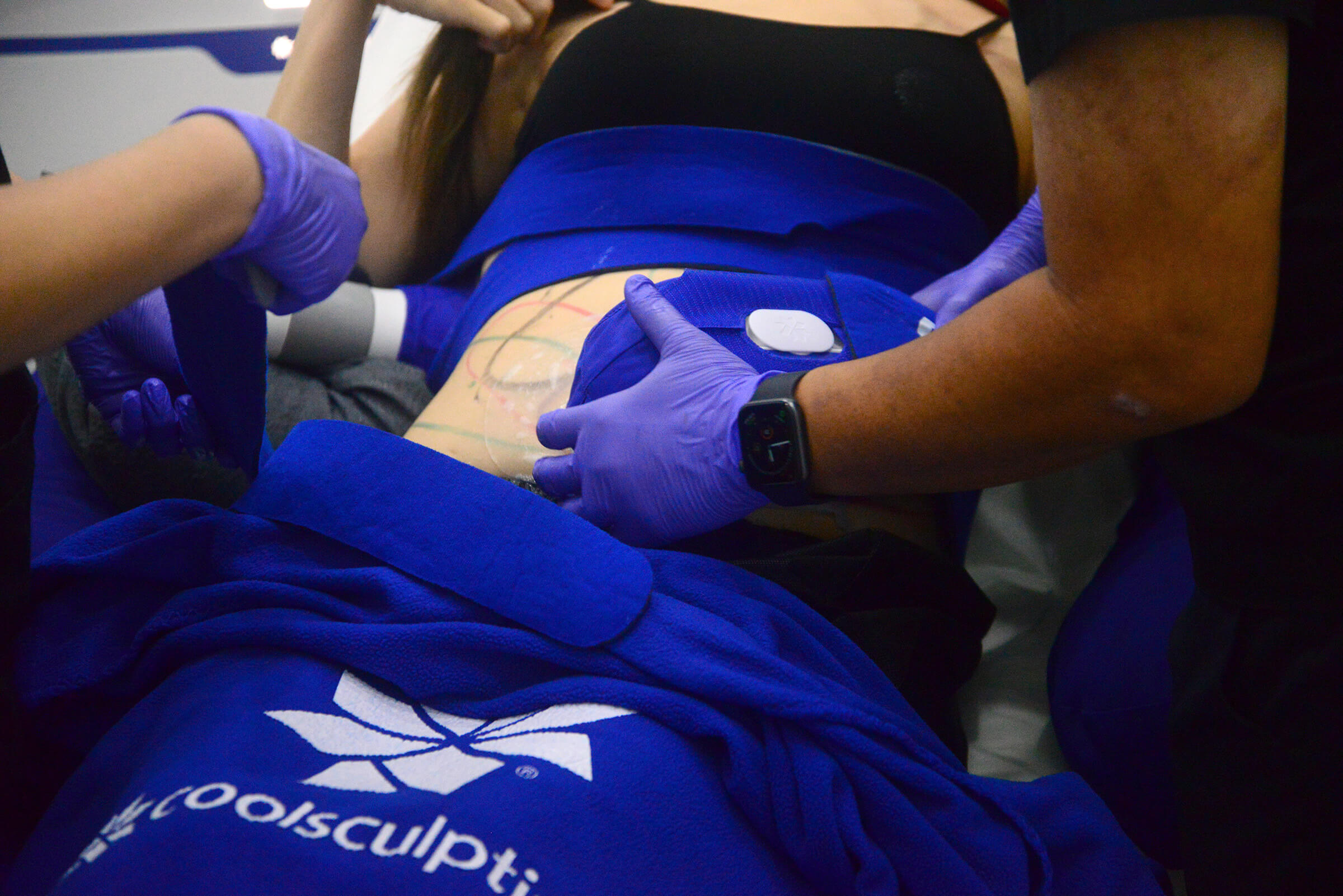
During treatment, patients may feel a tugging sensation as the CoolSculpting Elite device draws the targeted area into a cup-shaped applicator, which uses nodes to cool the skin. This will be followed by a cooling, tingling, and aching sensation that fades once the skin reaches the desired treatment temperature, leaving the area numb. The process is generally comfortable, especially when the applicators are well-supported with cushions by trained practitioners.
Tenderness and swelling
After treatment, patients may experience mild aching and tenderness. However, with advancements in medical technology, CoolSculpting Elite produces less post-treatment discomfort compared to earlier models. These sensations typically resolve on their own within a week, and patients are advised to wear loose clothing during this time. Apart from this minor wardrobe adjustment, the discomfort is usually well tolerated by patients.
Aching and cramping
According to studies, a two-minute post-treatment message following the procedure can improve outcomes by aiding the breakdown and elimination of frozen fat cells. Some aching and cramping in the treatment area may be felt during this brief massage.
In most cases, these side effects do not interfere with daily activities, and patients can return to their routine shortly after the fat freezing procedure.
Understanding Rare Side Effects: Paradoxical Adipose Hyperplasia (PAH)
Paradoxical Adipose Hyperplasia (PAH): What You Need to Know
While fat freezing treatments are generally well tolerated, it is still important to be aware of rare side effects such as Paradoxical Adipose Hyperplasia (PAH). In uncommon cases, fat cells in the treated area may increase in size instead of shrinking. This change can result in a noticeable enlargement in the area, which may require follow-up procedures for correction.
The occurrence of PAH has been estimated at an incidence of approximately 0.0051% (or about 1 in 20,000 treatment cycles) according to early data, though reported rates may vary slightly across different sources. PAH typically becomes apparent two to three months after the procedure and does not resolve without medical attention.
Although the likelihood of PAH is low, Halley Body Slimming Clinic encourages all patients to speak with their doctor about any safety concerns. An in-depth consultation helps to determine if fat freezing treatments such as CoolSculpting Elite are suitable for your goals and medical profile.
This is why it is essential that a doctor assesses each patient from the beginning and that the clinic follows established medical protocols for treatment. Doing so ensures that care is provided safely, appropriately, and with a full understanding of the patient’s needs.
To ensure a safe experience, it’s advisable to seek treatment at a reputable reputable weight loss clinic with a medical team trained in delivering body contouring treatments using devices approved by regulatory authorities. Careful planning, proper technique, and follow-up support all contribute to helping patients make informed decisions while minimising potential risks.
Get in touch with us today.
Frequently asked questions
What are the most common side effects of fat freezing?
Common side effects are usually localised to the treated area and may include temporary redness, swelling, numbness, tingling, bruising, or mild tenderness. These reactions are generally short-term and tend to resolve on their own over days to weeks. A medical consultation helps set expectations and assess suitability before undergoing non-invasive fat removal treatments.
Are the side effects of CoolSculpting Elite different from other fat freezing treatments?
CoolSculpting Elite should not be directly compared with other fat freezing devices. It is a US FDA-approved system designed with controlled cooling and built-in safety features to help protect the skin during treatment.
These features include Freeze Detect, which automatically stops the procedure if the treated area becomes too cold, as well as the use of a protective gel pad to reduce the risk of skin injury. Treatments are also planned and monitored under medical supervision.
Other fat freezing devices may not be US FDA approved and may not offer the same level of temperature control or safety mechanisms. For this reason, Halley Body Slimming Clinic focuses on using fat freezing devices approved by health authorities and doctor-assessed protocols to prioritise patient safety, treatment suitability, and results.
How long do side effects usually last after CoolSculpting Elite?
After CoolSculpting Elite, short-term effects such as redness, swelling, numbness, or tingling typically improve within a few days to weeks. Numbness and tingling are considered sensory changes related to temporary nerve exposure to cold.
In some individuals, these sensations may last longer but usually resolve gradually. Your doctor will advise what to expect based on the treatment area and your individual response.
Can fat freezing cause serious complications?
Serious complications are uncommon, but rare conditions such as Paradoxical Adipose Hyperplasia (PAH) have been reported. PAH refers to an increase in fat volume in the treated area instead of the expected reduction.
A systematic review and meta-analysis of published studies reports that PAH occurs infrequently following cryolipolysis treatments, with reported incidence rates remaining low across large patient populations. PAH typically becomes noticeable several months after treatment and does not resolve without medical assessment and management.
This is why consultation led by a doctor in Singapore is important before treatment. Discussing potential risks, treatment suitability, and follow-up care helps support informed decision-making and appropriate monitoring.
Should I consider other medical options if I’m concerned about side effects?
If you are concerned about side effects, speak to a doctor about alternative body contouring options that may be more suitable for your goals. Depending on your body profile and the areas you wish to address, your doctor may discuss non-cooling fat reduction approaches such as Vanquish, which uses radiofrequency (RF) energy instead of controlled cooling.
A medical consultation allows your doctor to explain how different technologies work, outline their respective considerations, and help you decide on an option that aligns with your comfort level and treatment expectations.
Medical Disclaimer:
The information provided in this article is for educational purposes only and does not constitute medical advice. Individual results with fat freezing treatments may vary. It is essential to consult a qualified medical professional for a personalised assessment, diagnosis, and treatment plan before undergoing any medical aesthetic procedure.