
| TABLE OF CONTENTS |
Weight loss journeys often start with lifestyle changes, such as improving diet, increasing physical activity, and building healthier daily habits. While these strategies remain essential, some individuals find that they do not always lead to meaningful or sustainable progress on their own. In these situations, doctors may discuss whether prescription weight loss medication approved by health authorities could be part of a medically guided treatment plan.
Today, prescription weight loss medication is available in two forms: injections and tablets. Injections are administered just under the skin, while tablets are taken by mouth and absorbed through the digestive system. Although the medication is taken differently, both are taken at scheduled intervals and work by modulating appetite signals and feelings of fullness.
This guide explains how medical weight management works, compares injectable and oral options, and outlines the factors doctors consider when recommending a particular approach.
Key takeaways
- Prescription weight loss medications are available as injections or oral tablets, each with different dosing routines and practical considerations.
- These treatments generally work by influencing appetite signals and satiety pathways, helping patients manage hunger more effectively.
- Doctors assess Body Mass Index (BMI), medical history, and existing conditions before recommending treatment.
- Factors such as comfort with injections, daily routines, and cost may influence the choice between injections and pills.
- When used within structured weight loss plans, medication for weight loss can help support long-term lifestyle changes.
How does prescription weight loss medication work?
Mechanisms of action
Most forms of prescription weight loss medication act on hormonal pathways involved in hunger, satiety, and energy balance. They do not directly remove fat cells or alter how the body stores fat. Instead, they help regulate appetite signals so that individuals may find it easier to maintain dietary adjustments.
Some medications influence gut-brain communication pathways linked to fullness. These include medications that mimic hormones such as glucagon-like peptide-1 (GLP-1), which play a role in appetite regulation and glucose metabolism. These influence the signals that tell the brain when to stop eating.
Some treatments also affect insulin response and gastric emptying. These combined mechanisms may help reduce hunger, promote earlier satiety, and support gradual reductions in calorie intake over time.
Weight loss injections

Weight loss injections typically contain active ingredients that interact with appetite and satiety receptors. These prescription weight loss medications are delivered subcutaneously using small injection pens designed for self-administration.
There are several medications approved by health authorities like the US Food and Drug Administration (US FDA) used in injectable weight loss treatments, including:
- Liraglutide: A GLP-1 receptor agonist administered through a daily injection pen. It mimics hormones involved in appetite signalling and may help reduce hunger while increasing feelings of fullness.
- Semaglutide: A GLP-1 receptor agonist typically administered as a once-weekly injection. It acts on appetite regulation pathways linked to satiety and calorie intake.
- Tirzepatide: A dual glucose-dependent insulinotropic polypeptide (GIP)/GLP-1 receptor agonist that targets multiple metabolic pathways associated with appetite and insulin signalling.
Oral medication

Oral medication is taken as tablets and absorbed through the digestive system before entering the bloodstream. While the method of administration differs from injectables, many weight loss pills target similar appetite-related pathways involved in hunger regulation and satiety.
There are different types of oral medications that doctors may prescribe. Some pills contain a combination of active ingredients such as bupropion and naltrexone, which influence brain signals associated with cravings and reward behaviour. By affecting these pathways, the medication may help reduce hunger and support better control over eating patterns.
Another oral option contains semaglutide in tablet form. Although it is taken daily rather than injected, the medication still acts on GLP-1 pathways involved in appetite regulation. This means the biological processes targeted by the medication can be comparable to those influenced by certain injectable treatments.
Medication as part of a broader weight management plan
In clinical practice, prescription weight loss medication is rarely used as a standalone solution. Instead, they often become part of a structured, doctor-supervised weight reduction plan designed to support behavioural and dietary adjustments. These plans often include nutritional guidance, physical activity planning, and habit-building strategies that help patients develop sustainable routines over time.
Individual responses and monitoring
Every patient responds differently to prescription weight loss medication. Factors such as metabolism, tolerance, and existing medical conditions may influence how an individual experiences treatment.
Doctors typically monitor progress through regular consultations. During these reviews, they may assess weight trends, side effects, and adherence to the treatment plan. Adjustments to medication dosage or type may be considered if necessary.
Comparing weight loss injections and pills
For many individuals considering prescription weight loss medication, one of the first questions that arises is whether injections or tablets might be more suitable. Here is how these two weight loss therapy options compare.
1. Method of administration and absorption
One of the most noticeable differences between injectable and oral prescription weight loss medication lies in the medication’s delivery and absorption.
Injectable treatments are administered through small subcutaneous injections using pre-filled pens. Because the medication is delivered beneath the skin, injectable prescription weight loss medication bypasses the digestive system and enters the bloodstream directly through subcutaneous tissue.
Oral medication, on the other hand, is taken as tablets and absorbed through the digestive tract before entering the bloodstream. This additional step in the absorption process can influence how the medication is processed by the body and how dosing schedules are structured.
Currently, the oral prescription weight loss medication available in Singapore is taken daily. Injectable medications may follow either a daily or weekly schedule, depending on the active ingredient prescribed. For example, medications containing liraglutide are administered once a day, while other injectable medications are typically administered once a week.
The choice between daily and weekly medication is not simply about convenience. Doctors also consider factors such as medical history, lifestyle, treatment goals, and individual response before recommending a suitable option.
2. Potential side effects
Both injections and tablets may be associated with fairly similar side effects, although the specific experience varies depending on the medication and the individual’s response to it.
Commonly reported effects linked to both injectable and oral prescription weight loss medication include gastrointestinal symptoms such as nausea, changes in appetite, or alterations in bowel habits. These effects may appear during the early stages of treatment and often stabilise as the body adjusts to the medication.
Some injectable treatments may also cause mild redness or tenderness at the injection site. A doctor will monitor these reactions during follow-up visits.
3. Storage and travel considerations
Storage requirements are different for injectable and oral weight loss medications, which will influence patients’ decisions.
Injectables require refrigeration to maintain the integrity of the medication. Injection pens need to be stored at standard refrigerator temperatures (typically between 2°C and 8°C) and must not be frozen. When travelling, patients will need to use insulated storage or cooling packs to ensure the medication remains within the recommended temperature range.
Oral tablets do not require refrigeration and can be stored at room temperature. For some individuals, this makes oral prescription weight loss medication easier to manage during travel or daily commuting. If you are uncertain, speak to your doctor about how to manage your weight loss journey when you are travelling.
Which should you choose: Weight loss injections or pills?
Factors patients should consider
When deciding between injectable and oral prescription weight loss medication, it’s important to weigh several practical and personal considerations. While the final recommendation should come from a doctor, understanding these factors can help patients make more informed decisions during consultation.
1. Comfort with injections
One of the most immediate considerations is comfort with needles. Injectables are administered using a small injection pen, either daily or once weekly, depending on the medication. Some individuals adapt quickly to self-injection, while others may prefer avoiding needles altogether and feel more comfortable taking tablets.
2. Dosing frequency and routine
Different medications follow different dosing schedules. Some injectable medications are administered once a week, while others, such as certain formulations containing liraglutide, require daily injections. Oral medications are also typically taken once a day. Patients should consider which dosing routine fits more comfortably into their daily habits and which option they are most likely to follow consistently over time.
3. Cost and accessibility
Cost is also an important consideration when choosing prescription weight loss medication. Because treatment may continue for several months, it is essential to discuss pricing and long-term affordability with your doctor before starting medication.
4. Long-term lifestyle adjustments
When considering prescription weight loss medication, it is helpful to think about the adjustments that you will have to make to your lifestyle in the long-term. At the same time, activities that used to be difficult, such as dietary changes, changes in portion sizes and exercising, will now be easier to achieve with weight loss medications helping to regulate hunger and fullness cues.
Once you have achieved your desired weight loss with the help of medication, you will be more motivated to maintain your weight through lifestyle changes, even when you reduce or stop your medication. Your doctor will also guide you through sustainable weight management without relying on medication.
What doctors consider when making a recommendation
Doctors at a weight loss clinic in Singapore will also assess several medical and lifestyle factors to determine which prescription weight loss medication may be suitable for you.
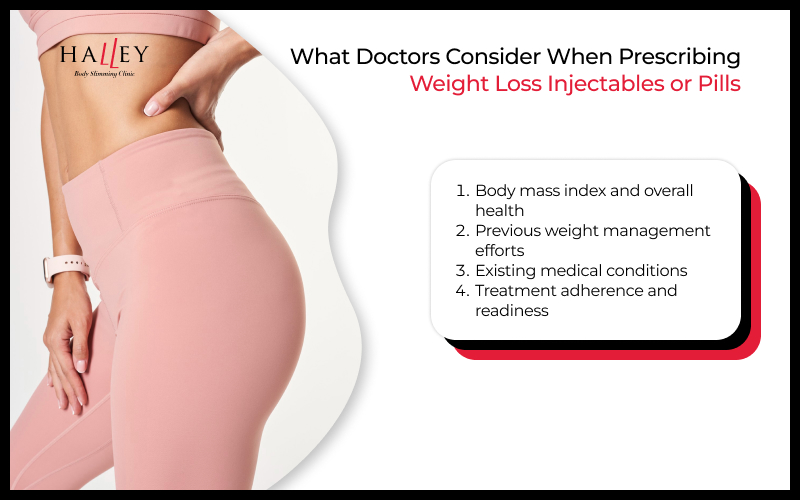
1. Body mass index and overall health
One of the first considerations is body mass index (BMI), together with the individual’s overall health profile and medical history. BMI provides a general indication of whether prescribing weight loss medication may be appropriate within medical guidelines. These medications are typically recommended for individuals above certain BMI thresholds or for those with weight-related health conditions like type 2 diabetes, high blood pressure, or high cholesterol. Doctors also review existing medical conditions, medications, and risk factors to ensure that the chosen treatment aligns with the patient’s overall health and safety.
2. Previous weight management efforts
Doctors also review past attempts at weight management, including responses to lifestyle changes such as dietary adjustments, increased physical activity, and eating habits. This helps them understand whether previous approaches were difficult to sustain due to appetite control, cravings, or other challenges. These insights can guide how medication can support ongoing lifestyle changes.
3. Existing medical conditions
Certain medical conditions may influence which medication is considered more appropriate. For example, individuals with type 2 diabetes or insulin resistance may benefit from medications that also affect glucose regulation, while others may need to avoid certain drugs due to potential interactions with existing treatments. These conditions will need to be reviewed carefully to ensure that the chosen prescription weight loss medication does not interfere with other aspects of the patient’s medical care.
4. Adherence to treatment and readiness for change
Doctors also consider a patient’s ability to maintain consistent treatment routines. Both injections and tablets require regular dosing, and patients need to feel comfortable following the prescribed schedule. Discussing expectations, daily habits, and readiness for treatment also helps determine whether medication can be realistically integrated into structured weight loss programmes that include dietary adjustments, physical activity, and support for sustainable lifestyle changes.
Questions patients often ask
1. Which option works faster, injections or pills?
The timeframe for changes varies depending on the medication, how much weight one needs to lose, the individual’s health profile, and adherence to lifestyle adjustments and dosing schedule. There is no single timeline that applies to every form of prescription weight loss medication.
2. Are weight loss injections stronger than pills?
Both injectable and oral prescription medications support weight management efforts. The choice is based on suitability, medical history, and treatment response rather than the assumption that one form is stronger.
3. What if I am not comfortable with needles?
Patients who prefer to avoid injections may consider oral medication instead. A doctor can explain available options and determine which approach aligns with the patient’s preferences.
4. Do I need to stay on medication permanently?
No, it is not necessary to do so. Medication for weight loss is prescribed for a specific period as part of a medically-supervised plan. A doctor will determine the appropriate dosage and duration based on your health profile, treatment goals, and response.
In many cases, patients stop taking the medication after reaching a healthier weight or once their eating habits and lifestyle changes become easier to maintain. During follow-up consultations, doctors will provide guidance on adjusting diet, activity levels, and daily routines so that weight management can continue even after the medication is reduced or discontinued.
5. Can injections and pills be taken together?
It is not recommended because each medication works through specific mechanisms, and using multiple drugs simultaneously can increase the risk of side effects or complications. The newer forms of prescription weight loss medication described here are already designed to target multiple pathways safely in a single formulation. We recommend speaking to your weight loss doctor, who will be able to help address this concern.
6. Will I develop loose skin after weight loss?
Loose skin after weight loss can occur when the skin does not fully adapt to changes in body size. This is more likely when weight loss happens quickly or when a significant amount of weight is lost. Factors such as age, skin elasticity, genetics, and the duration of previous weight gain can also influence how the skin responds.
If loose skin becomes a concern, Halley Body Slimming Clinic also offers ultrasound- and radiofrequency-based treatments that can help support skin firmness as the body adjusts to changes in weight. During consultation, doctors can assess the skin and recommend suitable options based on the individual’s condition and treatment goals.
Choosing the right treatment approach at Halley Body Slimming Clinic

The choice between injections and tablets ultimately depends on an individual’s health profile, lifestyle preferences, and treatment goals. Both injectable and oral medication can support structured weight management when prescribed and monitored by a doctor, with treatment plans often incorporating dietary guidance and behavioural strategies to support sustainable results.
Considering prescription medication to supplement your weight loss journey? Halley Body Slimming Clinic offers doctor-supervised consultations to help determine whether weight loss medication may be appropriate for you. Schedule a consultation with us today to discuss suitable treatment options as part of a personalised weight management plan.’